

No products added!



July 1, 2025
by
Zeek PT
( 1 ) Comment
Does Manual Therapy Actually Work? What Physical Therapy Research Tells Us
If you've been to physical therapy before, there's a good chance you've experienced some form of manual therapy.
Joint mobilization, manipulation, soft-tissue techniques, and hands-on stretching are commonly used by physical therapists to help patients experiencing pain or movement limitations.
But there's an important question:
Does manual therapy actually work?
Research suggests that manual therapy can help certain patients reduce pain and improve function – particularly in the short term and when used as part of a broader rehabilitation program.¹ ²
Understanding how it works, however, is just as important as knowing that it can work.
What Is Manual Therapy?
Manual therapy is a broad term describing hands-on techniques performed by a trained healthcare professional.
Depending on your condition and goals, treatment may include:
- Joint mobilization
- Joint manipulation
- Soft-tissue mobilization
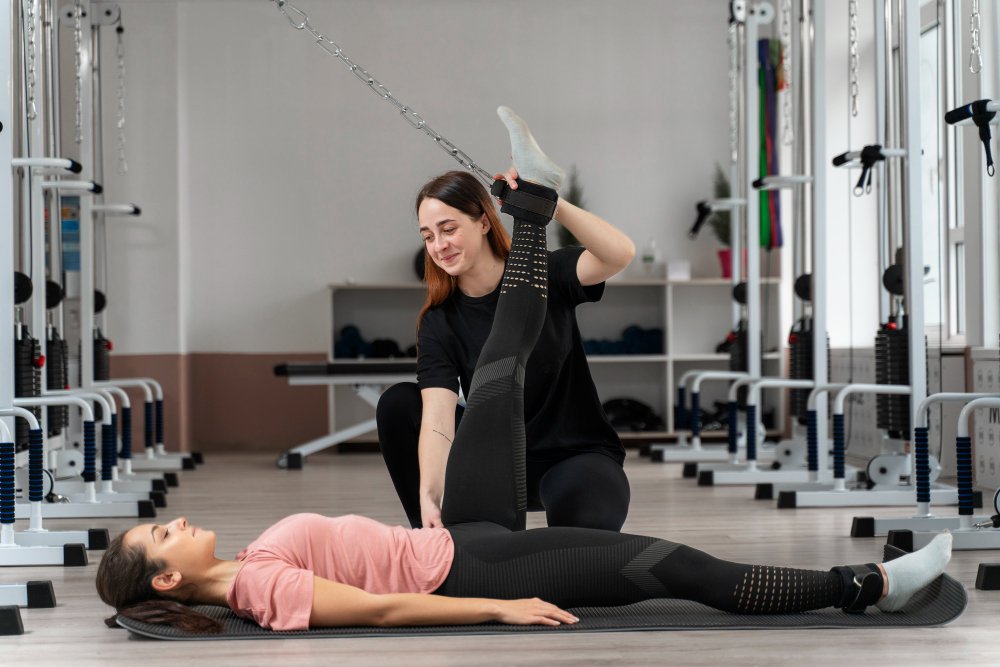
- Assisted stretching
- Other hands-on techniques designed to improve movement or reduce symptoms
Physical therapists may use manual therapy for conditions involving the neck, back, shoulder, hip, knee, ankle, and other areas of the body.
The specific technique should be selected based on the individual patient – not simply because a certain body part hurts.
What Are the Benefits of Manual Therapy?
Manual therapy can help some patients experience short-term improvements in pain, mobility, and movement tolerance.
For example, imagine that shoulder pain makes it uncomfortable to raise your arm overhead.
After manual therapy, your pain decreases and your shoulder moves more comfortably.
That’s valuable – but the real opportunity is what we can do with that change.
If you can now move with less discomfort, we may be able to use that improved window to exercise, strengthen the shoulder, and gradually expose it to the activities you need to perform.
In that situation, manual therapy isn’t necessarily the entire treatment.
It’s helping create an opportunity for rehabilitation.
How Does Manual Therapy Actually Work?
Historically, patients were sometimes told that manual therapy worked because a therapist was “putting a joint back into place,” breaking apart scar tissue, or permanently changing the alignment of the body.
Modern research suggests the explanation is much more complex.
Manual therapy can produce several responses involving the **nervous system, pain processing, local tissues, and other neurophysiological mechanisms.
Think of it less like a mechanic physically putting a crooked part back into position and more like turning down the volume on an overly sensitive alarm system.
The alarm may be real, but reducing its sensitivity can make movement more comfortable and allow you to start rebuilding what the body needs.
This is one reason a patient may experience an immediate improvement in pain or movement even though we haven’t dramatically changed the physical structure of their joint or spine.
Manual Therapy Isn’t a Permanent “Fix”
This distinction matters.
A manipulation doesn’t necessarily mean a joint was “put back into place.”
Soft-tissue treatment doesn’t necessarily mean scar tissue was physically “broken apart.”
And feeling better immediately after treatment doesn’t always mean the underlying problem has completely resolved.
Instead, manual therapy may temporarily influence pain, muscle activity, movement, and how comfortable an activity feels.³
Those changes can be extremely useful.
But they should often serve as a bridge toward active rehabilitation, rather than creating a situation where a patient feels dependent on treatment indefinitely.
Manual Therapy + Exercise
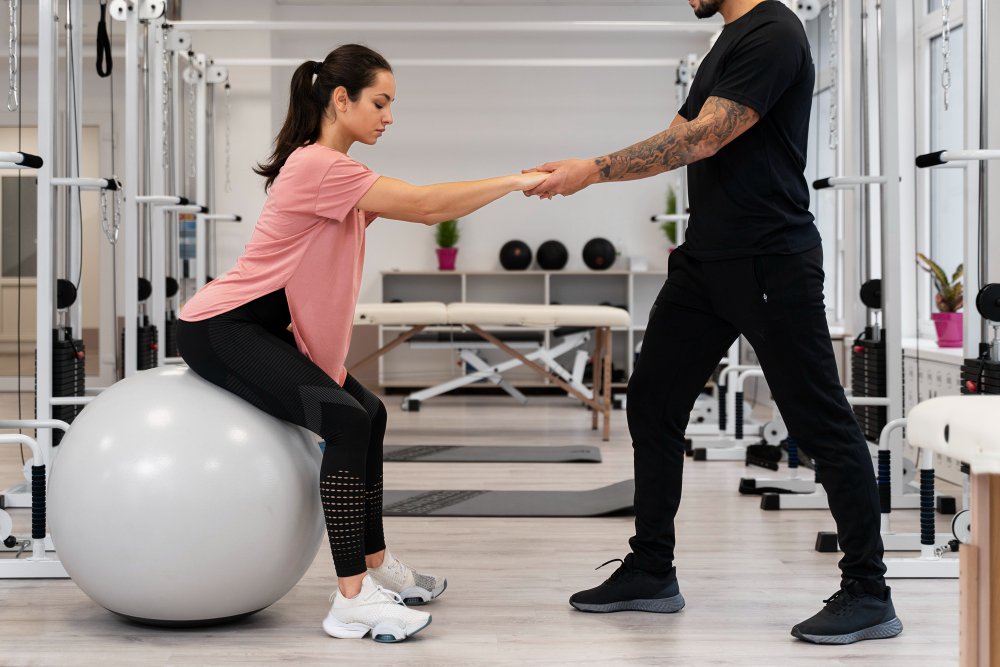
At Zeek PT, we don’t believe patients necessarily have to choose between hands-on treatment and exercise.
The two can complement each other.
Manual therapy may help you move or feel better today.
Progressive exercise helps build the strength, capacity, and confidence you need for tomorrow.
Research and clinical guidelines support this type of combined approach for several musculoskeletal conditions. For example, current physical therapy guidelines for low back pain recommend thrust or non-thrust joint mobilization for certain patients while also strongly supporting exercise interventions.²
For an athlete, rehabilitation may eventually progress into sprinting, jumping, cutting, or heavy strength training.
For someone with back pain, it might mean returning to squatting or deadlifting confidently.
For another patient, success may simply mean working an entire day without constantly thinking about their neck or shoulder.
The treatment should ultimately prepare you for your goals.
When Should Manual Therapy Be Used?
Manual therapy makes the most sense when it produces a meaningful change that helps move rehabilitation forward.
After performing a technique, we can reassess.
Did your pain decrease?
Did your range of motion improve?
Can you perform an important movement more comfortably?
If the answer is yes, manual therapy may be a useful part of your treatment.
If repeated treatments aren’t producing meaningful changes, the treatment plan should be reconsidered.
The goal isn’t to perform manual therapy simply because you’re attending physical therapy.
The goal is to use the right tools to help you progress.
Physical Therapy Should Prepare You for Real Life
Ultimately, successful physical therapy should extend beyond what happens on the treatment table.
At Zeek PT & Recovery in North Austin, we combine manual therapy with progressive exercise, strength training, movement retraining, and return-to-sport or activity progressions based on each patient’s individual needs.
Hands-on treatment can be a valuable part of that process – but our goal isn’t to make you dependent on treatment.
It’s to help you build a body that can tolerate the things you want to do.
Because feeling better is important.
Being able to do more is the ultimate goal.
Recover. Rebuild. Perform.
References
- Rubinstein SM, de Zoete A, van Middelkoop M, Assendelft WJJ, de Boer MR, van Tulder MW. Benefits and harms of spinal manipulative therapy for the treatment of chronic low back pain: systematic review and meta-analysis of randomised controlled trials. BMJ. 2019;364:l689. doi:10.1136/bmj.l689.
This systematic review and meta-analysis found that spinal manipulative therapy produced similar effects to other recommended therapies for chronic low back pain, with improvements in pain and function supporting its use as one potential component of care. - George SZ, Fritz JM, Silfies SP, et al. Interventions for the Management of Acute and Chronic Low Back Pain: Revision 2021. Journal of Orthopaedic & Sports Physical Therapy. 2021;51(11):CPG1-CPG60. doi:10.2519/jospt.2021.0304.
This clinical practice guideline supports thrust and non-thrust joint mobilization for appropriate patients with acute and chronic low back pain while also strongly supporting exercise and active rehabilitation. - Bialosky JE, Bishop MD, Price DD, Robinson ME, George SZ. The mechanisms of manual therapy in the treatment of musculoskeletal pain: a comprehensive model. Manual Therapy. 2009;14(5):531-538. doi:10.1016/j.math.2008.09.001.
This influential paper proposed that the effects of manual therapy cannot be explained solely by mechanical changes and described a broader model involving neurophysiological responses and pain modulation. - Keter D, Bialosky JE, Beneciuk JM, et al. The mechanisms of manual therapy: A living review of systematic, narrative, and scoping reviews. PLOS ONE. 2025.
This contemporary review examined proposed mechanisms underlying manual therapy and found evidence supporting multiple neurological, neurovascular, neuroendocrine, and other responses while challenging overly simplistic biomechanical explanations of treatment effects.
Meta Description: Does manual therapy actually work? Learn what research says about hands-on physical therapy, joint manipulation, pain relief, mobility, and why exercise is important for long-term results.
Suggested SEO Keywords: manual therapy Austin, manual therapy North Austin, hands-on physical therapy Austin, manual therapy benefits, joint manipulation physical therapy, sports physical therapy Austin, physical therapist North Austin.